
Fauci Diary Shows He Intentionally Lied About Coronavirus Fatality Rate
WASHINGTON — Newly released diary entries attributed to former National Institute of Allergy and Infectious Diseases (NIAID) Director Dr. Anthony Fauci are fueling renewed scrutiny over his public statements during the early days of the COVID-19 pandemic. The documents, released by Sen. Rand Paul (R-Ky.) ahead of Fauci's scheduled testimony before the Senate Committee on Homeland Security and Governmental Affairs, have prompted allegations that Fauci privately estimated a substantially lower coronavirus fatality rate than the figures he publicly discussed in early 2020.
According to the diary entries released by Paul, Fauci wrote in February 2020 that the coronavirus case fatality rate was "more like 0.2-0.3% rather than 2.0%," suggesting that the total number of infections was likely far greater than official case counts at the time indicated.
The entry describes a conversation with former Centers for Disease Control and Prevention Director Tom Frieden regarding the rapidly developing outbreak.
"Tom Frieden called me this AM and we discussed various aspects of the outbreak. He and I are on the same page in thinking tht [sic] this is acting like a bad influenza in its transmissibility and that the denominator is much greater than 34,867 (above) making the case fatality rate (CFR) more like 0.2-0.3% rather than 2.0%."
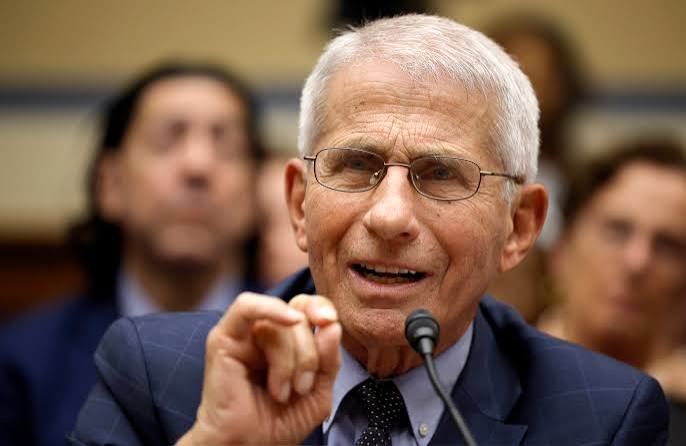
The newly disclosed documents are expected to become a focal point of Fauci's upcoming appearance before the committee as lawmakers seek answers about the federal government's early pandemic response and the scientific assumptions that informed public health guidance.
Critics argue the diary entry appears inconsistent with Fauci's public statements made just weeks later. During a March 2020 appearance on Hannity, Fauci said the coronavirus mortality rate was approximately "two, two and a half percent," while acknowledging it could ultimately prove to be lower.
"The mortality for seasonal flu is 0.1," Fauci said at the time. "The mortality for this is about two, two and a half percent. It's probably lower than that. It's probably closer to one. But even if it's one, it's ten times more lethal than the seasonal flu."
Later that month, Fauci testified before Congress that available data suggested COVID-19's mortality rate was approximately 3 percent, though he noted that accounting for asymptomatic and minimally symptomatic infections could reduce that figure to roughly 1 percent.
"Well, understand that the seasonal flu that we deal with every year has a mortality of 0.1 percent," Fauci told lawmakers. "The stated mortality overall of this, when you look at all the data, including China, is about 3 percent."
He added that including undiagnosed infections would likely lower the mortality estimate significantly but maintained that the virus remained substantially more dangerous than seasonal influenza.
Fauci made similar remarks during an appearance on The Daily Show with Trevor Noah in March 2020, stating that while seasonal influenza carried a mortality rate of approximately 0.1 percent, COVID-19 was "at least 1 percent," making it roughly ten times more lethal based on the information available at the time.
The apparent discrepancy between Fauci's private notes and his public comments has become central to allegations from some lawmakers that Americans were not provided with an accurate picture of the virus during the earliest stages of the pandemic.
Supporters of Fauci have previously argued that mortality estimates evolved rapidly throughout early 2020 as scientists struggled with incomplete data, limited testing capabilities and uncertainty surrounding the number of asymptomatic infections worldwide. Public health experts have noted that early estimates often distinguished between the case fatality rate — deaths among confirmed cases — and the infection fatality rate, which attempts to estimate deaths among all infections, including those that were never diagnosed.
Those estimates changed considerably as testing expanded and researchers gained a clearer understanding of the virus's prevalence.
Paul, who has frequently clashed with Fauci over pandemic policies and federal funding issues, released the diary shortly before Fauci's scheduled testimony on July 29. The Kentucky Republican has characterized the documents as raising significant questions about Fauci's public messaging during one of the most consequential public health crises in modern American history.
The release is likely to reignite debate over the government's handling of the pandemic, including whether public health officials adequately communicated scientific uncertainty as new information emerged.
Fauci has not publicly responded to the diary's release as of this writing. His testimony before the Senate committee is expected to address questions surrounding the documents and the broader federal response to COVID-19 during the opening months of the outbreak.