Federal Reserve Considers Additional Rate Hikes in Response to Soaring Gas Prices
WASHINGTON-- Beth Hammack, president of the Federal Reserve Bank of Cleveland, signaled Monday that the central bank may need to pivot in either direction on interest rates, underscoring a more uncertain economic outlook as inflation pressures and geopolitical risks continue to evolve.
In an interview with The Associated Press, Hammack said that if inflation remains stubbornly above the Fed’s long-standing 2% target, policymakers should be prepared to consider raising the benchmark interest rate—an option that had largely faded from expectations just months ago.
At the same time, she emphasized that rate cuts are still on the table if economic conditions weaken, particularly if rising energy costs begin to weigh on growth and push unemployment higher. The dual possibility of both hikes and cuts reflects the increasingly complex environment facing the Fed as it tries to balance price stability with a resilient labor market.
“My baseline is that we’re on hold for quite some time,” Hammack said, suggesting that the Fed is likely to keep rates steady in the near term as it assesses incoming data. “But I can foresee scenarios where we would need to reduce rates … if the labor market deteriorates significantly. Or I could see where we might need to raise rates if inflation stays persistently above our target.”
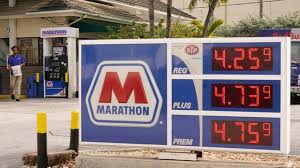
Her remarks mark a notable shift in tone compared to earlier this year, before the outbreak of war involving Iran, when many Fed officials were projecting as many as two rate cuts in 2026. Since then, renewed volatility in global energy markets—particularly higher gas prices—has complicated the inflation outlook, raising concerns that price pressures could remain elevated longer than anticipated.
A move to raise rates, should it materialize, would have broad implications for consumers and businesses alike. Higher benchmark rates typically translate into increased borrowing costs across the economy, pushing up interest rates on mortgages, auto loans and credit cards, and potentially slowing investment and spending.
Still, Hammack made clear that no single path is predetermined. Instead, she framed the Fed’s approach as highly data-dependent, with policymakers closely monitoring inflation trends, labor market strength and the broader impact of global developments on the U.S. economy.
The message: while the Fed may be on pause for now, the next move—whether up or down—will hinge on how these competing pressures ultimately play out.