Hawley Investigates Flock Cameras as Backlash Grows
WASHINGTON — A senior Senate Republican is opening a congressional investigation into Flock Safety, putting the rapidly expanding network of artificial intelligence-powered surveillance cameras under a level of federal scrutiny that could significantly broaden the debate over how law enforcement agencies collect, store and share Americans’ location data.
Sen. Josh Hawley, R-Mo., chairman of the Senate Judiciary Subcommittee on Crime and Counterterrorism, is seeking information from Flock Safety about the company’s collection, retention and dissemination of data generated by its cameras. The investigation comes as concerns over the technology move beyond city councils, privacy advocates and local law enforcement debates and increasingly become part of the national political conversation.
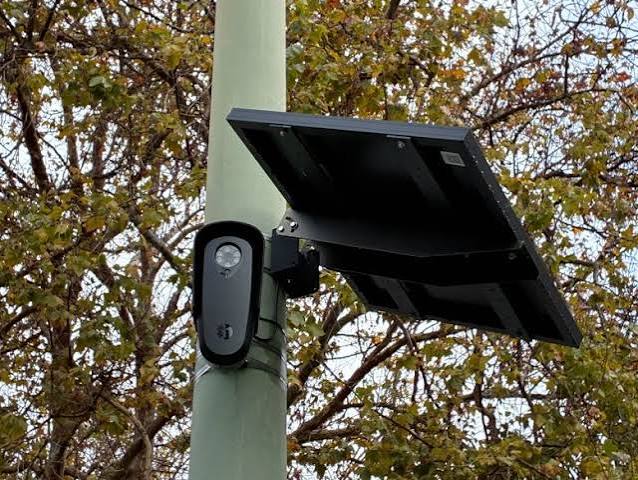
Flock Safety operates a network of roughly 120,000 cameras across the United States. The systems use automated license plate recognition and other technology to identify and track vehicles, allowing participating law enforcement agencies to piece together information about where vehicles have traveled.
The rapid expansion of the technology has prompted questions about how much information is being collected, who can access it, how long it remains available and what safeguards exist to prevent misuse.
The congressional inquiry also comes as lawmakers and political candidates from both parties have begun raising concerns about the broader implications of increasingly sophisticated surveillance systems. Some congressional candidates have incorporated criticism of Flock cameras into broader arguments about artificial intelligence, privacy and the growth of data infrastructure.
In a letter to Flock Safety CEO Garrett Langley, first obtained by Axios, Hawley argued that Congress never explicitly authorized the nationwide surveillance network that has developed through agreements between Flock and local governments.
“Congress never authorized the network your industry has built,” Hawley wrote.
He said the absence of a comprehensive federal framework means that private company policies and individual law enforcement agencies effectively determine the rules governing information collected on potentially hundreds of millions of Americans.
“Your company's internal policies are, in practice, the only safeguards for hundreds of millions of Americans,” Hawley wrote. “People across the country are now discovering that fact and demanding answers from their elected officials.”
Hawley cited several recent controversies involving alleged misuse of Flock technology as justification for the investigation. Those incidents include allegations that police officers improperly used the systems and cases in which people were arrested after authorities relied on inaccurate or misleading information generated by surveillance technology.
The senator said Americans deserve greater transparency about how their information is being handled and who has the ability to access it.
“The American public wants to know who has access to their personal data and how,” Hawley wrote, adding that his investigation will seek to provide those answers.
Flock defends technology
Flock Safety has maintained that its technology serves a legitimate public-safety purpose and has emphasized the safeguards it says are built into its systems.
The company told Axios that it has been responding to concerns raised by customers, communities and civil liberties organizations and continues to make changes to its privacy protections.
“We have received Senator Hawley’s letter and appreciate the opportunity to provide the Subcommittee with additional information about Flock and our technology,” Flock Safety spokesperson Paris Lewbel said in a statement.
Lewbel said the company plans to respond directly to Hawley’s questions and provide lawmakers with additional information about how its technology operates, the safeguards incorporated into its platform and how police departments use the systems.
“We look forward to working with Senator Hawley and the Subcommittee to provide additional context about how our technology works, the safeguards built into our platform, and how law enforcement agencies use Flock to solve crime and find missing people,” Lewbel said.
The company has also pointed to the technology's reported public-safety benefits. Flock says its cameras have contributed to approximately 1 million police investigations and helped authorities locate about 10,000 missing people.
Those claims have become central to Flock's defense as the company faces growing scrutiny. Supporters argue that automated license plate recognition can give investigators a valuable tool for solving crimes and locating vulnerable people without requiring officers to manually monitor streets or review hours of conventional surveillance footage.
Critics, however, argue that the sheer scale of the network raises questions that go beyond individual investigations. They contend that technology capable of recording and searching vehicle movements can create a detailed picture of where people live, work, worship, seek medical care or spend their personal time, even when those individuals are not suspected of committing a crime.
Hawley seeks broad records
Hawley's letter requests a wide range of records from Flock Safety as the Senate attempts to determine how the company's technology operates and how its data is used by law enforcement.
Among other requests, Hawley is seeking documents concerning the company's policies governing police access to information, the placement of cameras and the collection, storage and handling of data.
He also wants Flock to provide information about any known or suspected misuse of its systems dating to 2021.
The senator is requesting records concerning the accuracy and security of Flock's technology, along with information about whether the cameras collect information beyond license plate data.
The investigation also extends into Flock's business relationships. Hawley has asked for documentation involving the company's contracts and agreements with local governments, as well as information about its sources of revenue and investors.
The requests could give lawmakers a broader look at an industry that has expanded rapidly while operating largely through contracts between private technology companies and individual municipalities and law enforcement agencies.
At issue is not simply whether the cameras help police solve crimes, but whether existing laws and oversight mechanisms are adequate for a surveillance network capable of collecting information on large numbers of people who are not under investigation.
Investigation could escalate
For now, Hawley's letter is a request for information rather than a compulsory congressional demand. But the investigation could become more consequential if Flock Safety declines to provide the requested records or if lawmakers determine that additional information is necessary.
Hawley could ultimately pursue subpoenas seeking documents or testimony from company officials. Such a move, however, would require the support of Democratic leadership on the subcommittee.
That bipartisan cooperation may be possible because concerns about automated surveillance have increasingly crossed traditional political lines.
Conservatives have raised questions about government overreach and the collection of Americans' personal information, while Democrats and civil liberties advocates have expressed concerns about privacy, due process, racial disparities in policing and the potential consequences of automated surveillance.
The growing political coalition illustrates how the Flock debate has evolved. What began largely as a local dispute over license plate readers is now becoming part of a larger national argument over artificial intelligence, privacy and the government's ability to monitor Americans' movements.
Hawley's investigation could therefore have implications well beyond Flock Safety itself. Depending on what the company provides and what Congress finds, lawmakers could face pressure to establish nationwide standards governing how automated license plate data is collected, retained, shared and accessed.
For communities that have already installed Flock cameras, the investigation could also intensify questions about whether local governments have sufficient oversight over surveillance systems that can reach far beyond the boundaries of the communities paying for them.
As the technology continues to spread, the central question facing lawmakers is becoming increasingly difficult to avoid: How much surveillance can be deployed in the name of public safety before Americans lose meaningful control over information about their own movements?