
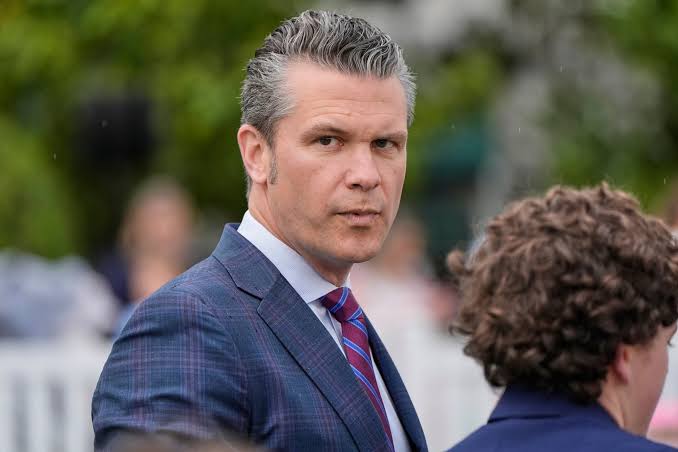
Hegseth Heads to Israel for Netanyahu Talks as Iran War Threatens to Reignite
WASHINGTON — Defense Secretary Pete Hegseth traveled to Israel on Monday for an unannounced meeting with Prime Minister Benjamin Netanyahu, a visit that comes at a politically sensitive moment for both governments as Israel prepares for national elections and President Donald Trump weighs his next moves in the confrontation with Iran.
The previously undisclosed trip was confirmed by a senior U.S. military official, who spoke to CBS News on condition of anonymity because they were not authorized to discuss the visit publicly. A second source involved in the matter in Israel confirmed Tuesday morning that Hegseth had met with Netanyahu.
Hegseth acknowledged the trip while speaking with reporters Tuesday, describing it as an opportunity to visit American service members stationed in the region and hold discussions with the Israeli leader.
"I was there visiting our troops," Hegseth said, adding that he also "had a chance to talk to the prime minister."
He declined to disclose the substance of the discussions, saying the details were not something he would discuss publicly. Hegseth nevertheless characterized Israel as a partner of the United States, saying the two countries had been good partners and that he appreciated the relationship.
The Pentagon declined to comment further on the visit. CBS News also sought comment from the Israeli government.
The timing of Hegseth's trip is notable. Netanyahu is approaching a consequential election scheduled for Oct. 27, with his right-wing Likud-led coalition seeking to retain power against several challengers. At the same time, the Trump administration is confronting an unresolved conflict with Iran, with the president publicly weighing whether to pursue an agreement with Tehran or resume military action.
Trump has suggested that a decision on the next phase of the confrontation could come after the November U.S. midterm elections, raising the prospect that the months ahead could bring either renewed diplomatic efforts or another escalation in the region.
The visit also underscores the close military relationship between Washington and Jerusalem following months of direct hostilities involving Iran, Israel and the United States.
Iran remains at the center of U.S.-Israeli security discussions
American and Israeli forces launched joint strikes against Iran in late February, bringing the two allies into a direct military confrontation with Tehran. The countries coordinated closely during the early stages of the war, building on an established security partnership that has included intelligence cooperation, military assistance and joint planning.
The United States had also directly targeted Iranian nuclear infrastructure in June 2025, when American forces struck three nuclear sites during a broader conflict between Israel and Iran.
Although the United States and Iran have largely refrained from attacking each other in recent weeks, the conflict remains unresolved. Trump has continued to speak publicly about the possibility of renewed military operations, while also leaving open the prospect of reaching an agreement with Iran's leadership.
The president has described the choice in stark terms, saying he is weighing whether to strike a deal or "annihilate" the country. He has indicated that the timing of a decision could extend beyond the U.S. midterm elections next month.
That uncertainty has left the future of the conflict in question, with the possibility of renewed fighting carrying implications for regional security, energy markets and the broader U.S. military presence in the Middle East.
Hegseth's discussions with Netanyahu come against that backdrop, although neither government has publicly disclosed what the two leaders discussed or whether the meeting involved specific military plans concerning Iran.
The visit's secrecy, combined with its timing, has drawn attention to the relationship between the two governments as both face important political developments at home.
Netanyahu faces a critical election
Netanyahu, Israel's longest-serving prime minister, is preparing for an election that could determine whether his coalition remains in power or gives way to a different political alignment.
His Likud party leads a right-wing governing coalition facing competition from several more centrist political forces. Among the challengers is a party led by Gadi Eisenkot, a former chief of staff of the Israel Defense Forces.
The election comes as Netanyahu's government navigates the consequences of the conflict with Iran, continuing security challenges and negotiations over the future of the region.
Netanyahu said last week that he was not planning to launch another round of strikes against Iran before the Oct. 27 vote. In remarks reported by Reuters on Oct. 14, he indicated that such an operation would not be convenient ahead of the election.
His comments came as Trump continued to consider the next steps in the confrontation with Tehran, leaving open questions about how closely the two leaders' calculations align as their respective political timelines converge.
Trump publicly reinforced his support for Netanyahu on Sunday, praising the Israeli leader in a post on Truth Social.
The president described Netanyahu as "a Great Warrior Prime Minister, and an even greater Partner for Peace in combatting the Islamic Republic of Iran."
The endorsement highlighted the continued political and strategic relationship between the two leaders as Netanyahu seeks another term and the Trump administration considers its approach to Iran.
Close allies, with occasional disagreements
Trump and Netanyahu have maintained a close relationship, particularly on Iran, but their governments have also disagreed over aspects of Israel's military operations and regional policy.
During the spring and summer, the Trump administration urged Israel to reduce its attacks on Lebanon, where the Iran-backed militant group Hezbollah has maintained a significant presence. Washington also pressed the Israeli government to take stronger action against settler violence in the occupied West Bank.
The administration has separately encouraged Israel to pursue a longer-term agreement with Hamas in the Gaza Strip, including efforts to advance the next phase of a proposed peace arrangement.
Those disagreements have illustrated the challenges of balancing the two countries' shared security objectives with Washington's broader diplomatic priorities across the Middle East.
Trump has at times sought to restrain Israeli military operations even while maintaining strong support for Netanyahu and Israel's confrontation with Iran.
Last month, Trump's envoy Jared Kushner suggested that Israel's approaching election could be complicating progress toward a longer-term arrangement in Gaza.
Speaking at a conference in Kyiv, Kushner pointed to the domestic political pressures facing Israel, saying: "They just have a crazy election, and that makes them a little irrational in certain regards."
His remarks suggested that electoral calculations could be affecting the pace of negotiations at a time when the Trump administration has been seeking progress on regional agreements.
Netanyahu's government must now navigate the competing demands of domestic politics, security concerns and relations with Washington, while Trump faces his own political test in the upcoming U.S. midterms.
Questions remain over the next phase of the conflict
Hegseth's trip offers another indication of the continuing high-level engagement between the United States and Israel, but the lack of public details leaves the purpose and scope of the Netanyahu meeting unclear.
Neither the Pentagon nor the Israeli government has publicly outlined whether the discussions focused primarily on military coordination, the status of the Iran conflict, regional diplomacy or other security matters.
The visit comes as Trump continues to weigh his options toward Tehran and has left open the possibility of renewed military action after the U.S. midterm elections. Netanyahu, meanwhile, has said he does not intend to launch fresh strikes against Iran before Israel's Oct. 27 election.
Those timelines place both governments at a consequential juncture, with domestic political considerations unfolding alongside unresolved regional tensions.
Axios was the first outlet to report Hegseth's visit to Israel and his meeting with Netanyahu.
For now, the precise agenda of the talks remains undisclosed. But the meeting comes as Washington and Jerusalem confront questions about the future of their military campaign against Iran, the prospects for diplomacy and the potential consequences of another escalation in a region already affected by months of conflict.