
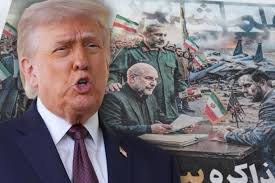
House Blocks Bid to Pull U.S. Troops From Iran as Republicans Stand With Trump
WASHINGTON-- The House on Thursday narrowly rejected a resolution that would have required President Donald Trump to withdraw U.S. military forces from the ongoing conflict with Iran absent explicit authorization from Congress, marking the latest failed effort by lawmakers seeking to reassert their constitutional war powers.
The measure fell short in a 213-214 vote, underscoring the deep partisan divide over the administration’s military strategy and the continued support Trump has received from most Republicans in Congress. The outcome came just one day after a similar resolution was defeated in the Senate.
The United States, alongside Israel, launched strikes against Iran on Feb. 28. A tenuous ceasefire has since taken hold and is now entering its second week, though concerns remain about its durability and the potential for renewed escalation.
Democrats, who overwhelmingly backed the resolution, warned that the U.S. risks becoming entangled in a prolonged and costly conflict in the Middle East. Party leaders signaled they intend to continue pressing the issue, with additional war powers votes expected in the coming weeks.
“We are standing dangerously close to the brink, and Congress must act before the president takes us further down this path,” said Rep. Gregory Meeks of New York, the top Democrat on the House Foreign Affairs Committee. “Each day of inaction increases the likelihood of a conflict with no clear end.”
Republicans, however, pushed back on the criticism, arguing that Trump’s actions are consistent with past military engagements and accusing Democrats of applying a double standard. Rep. Brian Mast of Florida, who chairs the Foreign Affairs Committee, pointed to U.S. strikes against Iranian-backed Houthi forces in Yemen during President Joe Biden’s administration.
“When American ships were under attack, there was no outcry for war powers votes,” Mast said. “Now, under President Trump, we’re hearing constant demands for it. That inconsistency is hard to ignore.”
The War Powers Act of 1973 requires the president to seek congressional authorization for military action within 60 days of introducing U.S. forces into hostilities, with a possible 30-day extension. That deadline in the current conflict is approaching at the end of April, increasing pressure on the administration to clarify its objectives and outline a path forward.
Although the resolution failed, Democrats used the debate to highlight the broader consequences of the conflict, including its financial cost and impact on U.S. service members and domestic economic conditions. Lawmakers cited billions of dollars in expenditures, the deaths of at least 13 American troops, rising fuel prices, and strained relations with allies who have expressed reservations about the U.S. approach.
“Families back home are already feeling the strain,” said Rep. Pramila Jayapal, D-Wash. “Gas prices in my state have surged to $7 a gallon, and we are deploying more troops into a region without a defined strategy or exit plan.”
The Pentagon has recently authorized the deployment of an additional 10,000 troops to the Middle East, joining an estimated 50,000 already stationed across the region.
Republicans defended the administration’s posture, framing it as a necessary response to longstanding threats posed by Iran. “The president has made it clear that attacks against the United States and its allies will not go unanswered,” said Rep. Joe Wilson, R-S.C.
The vote saw limited defections from both parties. Rep. Thomas Massie of Kentucky was the only Republican to support the resolution, while Rep. Jared Golden of Maine was the sole Democrat to oppose it.
Thursday’s vote follows an earlier attempt in early March to curb Trump’s military actions against Iran, which also failed, 212-219.