
Iran Holds Firm to Demands on Strait of Hormuz as Mediators Plead for Deal
WASHINGTON-- Iran doubled down Tuesday on its demands for reopening the Strait of Hormuz, insisting that the strategically vital waterway will not return to normal unless Washington meets a sweeping list of conditions — even as Qatar and Pakistan, two key intermediaries, expressed growing optimism that the United States and Iran may be edging toward an agreement.
Mohsen Rezaei, head of Iran’s National Security Council, said the strait would remain closed unless the United States ends what Tehran describes as its war and military intervention in the region, including conflicts involving Gaza and Lebanon, releases frozen Iranian assets and satisfies Iran’s other demands, according to Iran’s semi-official Tasnim news agency.
Rezaei also cautioned that any understanding reached between Iran and Oman regarding the waterway would not necessarily result in an immediate reopening of the strait.
The comments underscore the enormous gap that remains between Tehran’s stated conditions and Washington’s position, despite increasingly active diplomatic efforts aimed at preventing the disruption of one of the world’s most important energy corridors from becoming a prolonged crisis.
Iranian Foreign Minister Abbas Araghchi reiterated Tehran’s position Tuesday, saying he had delivered similar demands during a phone conversation Monday with German Foreign Minister Johann Wadephul.
According to a statement posted by Araghchi on Telegram, he told Wadephul that restoring security in the Strait of Hormuz would require an end to what Iran calls U.S. “aggressive actions and unlawful interventions,” including the naval blockade and what Tehran characterizes as violations of Washington’s international obligations.
Wadephul offered a sharply different position. In a post on X, he said he had emphasized that the Strait of Hormuz must be reopened without conditions and that freedom and safety of navigation must be guaranteed.
The competing statements highlight the central obstacle confronting negotiators: Iran is linking the future of the waterway to broader political and military concessions from Washington, while Western governments have insisted that commercial shipping must be allowed to move freely regardless of the wider conflict.
Araghchi, meanwhile, struck a defiant tone when speaking to reporters, declaring that Iran had “astonished the whole world” during its confrontation with the United States and Israel and had demonstrated that it was a “tough and invincible power.”
Yet behind the hard-line public rhetoric, diplomatic activity appeared to be accelerating.
Pakistan Defense Minister Khawaja Asif told Bloomberg News Tuesday that Washington and Tehran may be approaching a preliminary understanding, describing the latest signals as increasingly favorable to a negotiated settlement.
“Things are shaping up again in favor of a peace arrangement or a deal,” Asif said. “The signals in the last two-three days are that we are close to some sort of an arrangement.”
Pakistan has emerged as one of the principal diplomatic channels between the United States and Iran, particularly following an interim peace agreement brokered by Islamabad in June. Two officials told The Associated Press that Pakistani Interior Minister Mohsin Naqvi traveled to Tehran on Tuesday as part of an effort to persuade Iranian officials to resume negotiations with Washington.
The officials spoke on condition of anonymity because they were not authorized to discuss the trip publicly. Pakistan’s government had not formally announced Naqvi’s visit, and the officials did not provide additional details about the talks.
Naqvi’s trip marked his sixth visit to Iran as part of Islamabad’s efforts to reduce tensions between Tehran and Washington and keep negotiations alive.
Qatar, another important intermediary, also offered signs that discussions surrounding the Strait of Hormuz could be moving forward.
Qatar Foreign Ministry spokesman Majed al-Ansari said Tuesday that negotiations between Oman and Iran over the future of shipping through the strait had reached an advanced stage.
Ansari said the immediate priority was restoring freedom of navigation and returning conditions in the waterway to what they were before the war. Any eventual agreement, he said, should reflect regional consensus and “full respect for international law.”
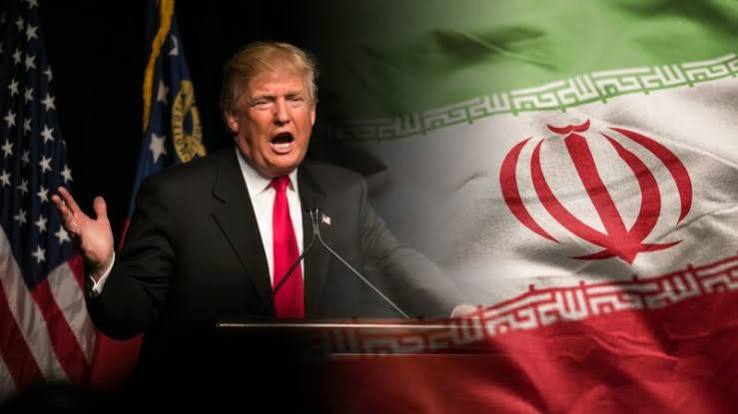
The diplomatic optimism comes as President Donald Trump continues to send mixed signals about the prospects for negotiations.
Trump said Monday that he was “sort of” negotiating with Iran while still considering whether diplomacy could produce an acceptable outcome or whether the United States would resume or intensify military action.
In an interview released late Monday with Real America’s Voice, Trump described Iranian negotiators as “very devious” and laid out two broad possibilities: allowing Iran’s economy to continue deteriorating under pressure or launching a much more forceful military campaign.
“I’m sort of negotiating,” Trump said. “They’re very devious negotiators.”
Trump argued that Iran is already suffering severe economic consequences and said Washington has control over frozen Iranian funds.
“Economically, they are a mess,” Trump said. “They can’t borrow money. We control their money, what they had, which is a lot. They had a lot, and we have total control of it. I’m their banker.”
He also suggested that the United States could choose instead to “hit them really, really hard.”
Trump dismissed concerns that the prolonged conflict could leave the U.S. military short of ammunition, saying the United States was producing weapons at a rapid pace. He also blamed former President Joe Biden for the depletion of some weapons stocks, claiming Biden had provided $300 billion worth of ammunition and weapons to Ukraine.
Analysts, however, have disputed that figure, saying the United States provided Ukraine with roughly $30 billion in existing munitions and weapons — far below the amount claimed by Trump. Those analysts also noted that U.S. stockpiles have been affected by the scale of weapons consumption during the 2025 war with Iran and the fighting that began Feb. 28 of this year.
Even as diplomats work to narrow their differences, maritime security incidents are adding urgency to the negotiations.
Reports of fresh attacks involving commercial shipping emerged Tuesday in the Gulf of Oman and Red Sea, underscoring the increasingly broad threat to international trade posed by the conflict.
The Wall Street Journal reported that a U.S. military helicopter fired on the rudder of a Panama-flagged vessel after the ship's crew allegedly ignored warnings from personnel enforcing a naval blockade of Iranian ports. The report, citing a U.S. official, said there were no immediate reports of casualties.
The vessel reportedly appeared to be attempting to transfer its crew to another civilian ship following the incident.
Earlier, British maritime risk management company Vanguard and a maritime security source said preliminary assessments indicated that the Panama-flagged container ship Vela Nova may have been struck by a missile while traveling through the Gulf of Oman.
The incidents demonstrate the stakes surrounding the diplomatic push. The Strait of Hormuz carries a substantial share of the world's energy supplies, making any prolonged interruption potentially disruptive to global oil markets, commercial shipping and already-strained supply chains.
For now, Tehran is refusing to separate the strait from the broader conflict, while Washington has yet to commit publicly to the concessions Iran is demanding.
The result is an increasingly precarious diplomatic moment: mediators say the two sides may be closer than they have been in days, but Iran continues to threaten that the Strait of Hormuz will remain closed unless its demands are met.
Whether the latest diplomatic momentum can bridge that divide — or whether renewed military escalation will overtake negotiations — remains uncertain.