
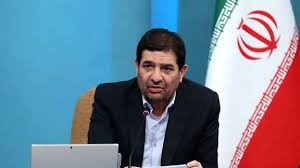
Iran's Supreme Leader: 'War Will Continue Unless US Respects Iran's Interests,' Despite Latest Trump Claim
TEHRAN, Iran — A senior adviser to Iran’s supreme leader said Tehran will continue fighting unless the United States recognizes and respects Iran’s interests, underscoring the growing tensions between the two countries after a second consecutive night of military strikes and counterstrikes.
In an interview with CNN, Mohammad Mokhber, an adviser to Supreme Leader Ayatollah Ali Khamenei, said Iran has no intention of yielding to military pressure and warned that the conflict could continue if diplomatic efforts fail to address Tehran’s demands.
“We will not back down,” Mokhber said, according to CNN. “The war will continue unless the United States respects Iran’s interests.”
His remarks came as Washington and Tehran exchanged fresh attacks for a second straight night, raising fears that the confrontation could spiral into a broader regional conflict involving U.S. allies and Iranian-backed groups across the Middle East.
The latest escalation follows weeks of rising tensions that have seen both sides trade threats, military strikes and accusations of aggression. While officials in both countries have publicly left the door open to diplomacy, recent military actions have cast doubt on the prospects for a near-term breakthrough.
Mokhber’s comments appeared to signal that Iran’s leadership remains committed to a hard-line stance despite mounting international pressure to de-escalate the conflict. Iranian officials have repeatedly argued that their military actions are defensive responses to what they describe as U.S. aggression and violations of Iranian sovereignty.
The White House has defended recent U.S. military operations, saying they were carried out to protect American personnel and interests in the region. U.S. officials have accused Iran of destabilizing the Middle East through support for proxy militias and attacks on American forces and allies.
The exchange of strikes has heightened concerns among regional governments and international observers, many of whom fear a prolonged conflict could disrupt global energy markets and draw additional countries into the fighting.
Iranian leaders have sought to project confidence in recent days, portraying the country as capable of withstanding sustained military pressure. State media outlets have emphasized national unity and resistance, while senior officials have warned that any further escalation by Washington would be met with a stronger response.
Despite the increasingly confrontational rhetoric, diplomatic channels have not been completely severed. Several countries have continued efforts to mediate between Washington and Tehran, though no major breakthrough has been announced.
CNN reported that the interview with Mokhber was conducted by correspondents Frederik Pleitgen and Claudia Otto inside Iran. The network noted that it operates in the country with permission from Iranian authorities while maintaining full editorial control over its reporting.
Mokhber’s remarks are among the clearest public indications yet that Iran’s leadership believes the conflict is likely to continue unless significant changes occur in the U.S. approach toward Tehran.
As military activity intensifies and diplomatic efforts remain uncertain, the latest statements from one of Iran’s top officials suggest neither side is prepared to retreat from its position, increasing the risk of further escalation in the days ahead.