
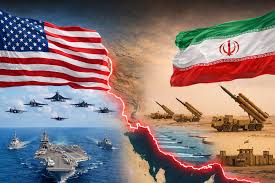
Kuwait Airport Attacked As Iran-US Tensions Reignite
WASHINGTON — A fragile ceasefire in the Middle East appeared increasingly at risk Wednesday after a new round of military strikes involving Iran, the United States, Israel and Hezbollah heightened fears of a broader regional conflict and cast uncertainty over ongoing diplomatic efforts.
The latest escalation began overnight when Iran launched missile attacks targeting sites in Kuwait and Bahrain, according to regional officials. The strikes marked a significant expansion of hostilities beyond previous flashpoints and raised concerns about the security of Gulf states that host key U.S. military facilities.
The United States responded with military strikes on Iran's Qeshm Island, a strategically located island near the Strait of Hormuz, one of the world's most important shipping corridors for oil and gas exports. U.S. officials said the action was intended as a response to the Iranian attacks and described it as a limited operation.
Neither Iran nor the United States immediately released comprehensive assessments of damage or casualties resulting from the strikes.
The renewed violence comes as diplomats have been attempting to preserve a ceasefire that had temporarily reduced fighting across multiple fronts in the region. The truce has faced repeated challenges amid ongoing tensions between Iran and Israel and continued clashes involving Iran-backed groups.
Despite the military exchanges, diplomatic discussions continued in Washington, where administration officials were reportedly evaluating options to prevent the conflict from spiraling into a wider regional war. Officials have emphasized the importance of maintaining communication channels with regional partners as efforts to stabilize the situation continue.
Iran has accused the United States and Israel of undermining regional stability through military actions, while U.S. officials have argued that Tehran's support for armed groups across the Middle East has contributed to escalating violence.
The latest developments have also intensified concerns among Gulf allies. Kuwait and Bahrain are longstanding U.S. security partners and host American military personnel and facilities. Both countries have previously sought to avoid becoming direct battlegrounds in the broader confrontation between Washington and Tehran.
Israel and Hezbollah have also remained engaged in hostilities along the Israel-Lebanon border, adding another layer of instability to an already volatile situation. Analysts warn that simultaneous conflicts involving multiple actors increase the risk of miscalculation and rapid escalation.
Global markets reacted cautiously to the developments, with investors closely monitoring the security situation around the Strait of Hormuz. Any disruption to shipping through the narrow waterway could have significant consequences for global energy supplies and prices.
International leaders have called for restraint and renewed diplomatic engagement. Several governments urged all parties to avoid actions that could further jeopardize ceasefire efforts and increase the likelihood of a broader regional conflict.
As military and political leaders assess the latest developments, the future of the ceasefire remains uncertain, with diplomats racing to preserve negotiations amid one of the most serious flare-ups in regional tensions in recent months.