MAHA Wasn't a Health Revolution. It Was a Political Psyop.
MAHA Wasn't a Health Revolution. It Was a Political Psyop.
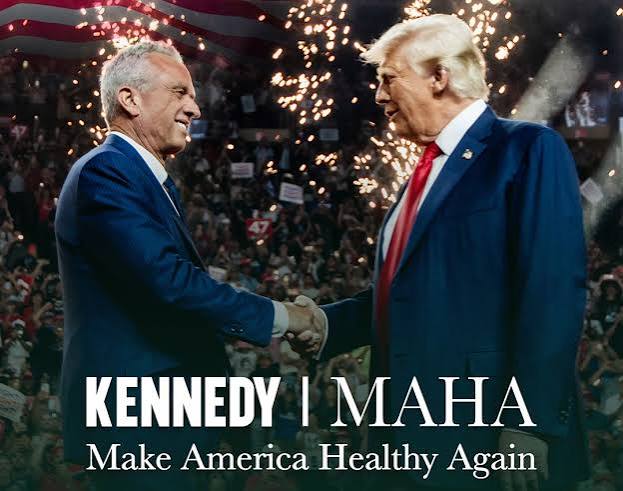
MAHA was packaged as a grassroots health revolution, but there is a compelling argument that it functioned more like a political psychological operation: take legitimate public frustration, identify an institution people already distrust, create a compelling enemy, and position a political movement as the only solution.
The genius of the strategy was that it didn't need to invent public distrust. Americans already had legitimate concerns about pharmaceutical companies, corporate influence over government regulators, food industry lobbying, rising chronic disease, and the declining affordability of healthcare. MAHA tapped into those frustrations and turned them into political capital.
It sold people the idea that a political administration was going to take on Big Pharma, challenge corporate food interests, restore scientific integrity, and put public health ahead of profits.
But there is a fundamental difference between questioning powerful institutions and actually dismantling the systems that allow them to operate with impunity.
A genuine health revolution would require confronting the financial interests embedded throughout the American healthcare and food systems. It would mean addressing pharmaceutical lobbying, corporate consolidation, conflicts of interest, agricultural subsidies, regulatory capture, healthcare affordability, and the enormous profits generated by keeping Americans sick.
Instead, MAHA offered a convenient political narrative: distrust established institutions, embrace the movement, and trust the political figures presenting themselves as the solution.
That is where the psychological manipulation comes into play.
A movement can use anti-establishment language while protecting the very power structures it claims to oppose. It can criticize pharmaceutical corporations while maintaining relationships with powerful financial interests. It can promise transparency while demanding political loyalty. And it can market itself as a rebellion against corporate influence without necessarily changing the economic incentives driving the problem.
The most effective propaganda doesn't always look like propaganda. Sometimes it looks like a movement for change.
MAHA's political value was that it transformed legitimate health concerns into political allegiance. It gave people an identity, an enemy, and a promise of salvation.
The question was never whether Americans deserved healthier food, greater pharmaceutical transparency, or more accountable regulators. Of course they did.
The question is whether MAHA was ever designed to deliver those things or whether those legitimate demands were simply the vehicle used to build political power.
Because if you convince people that you're fighting the system while leaving the underlying system intact, you haven't started a revolution. You've just rebranded the establishment.