
SCOTUS Backs Counting Late Mail Ballots in 5-4 Ruling
WASHINGTON — The Supreme Court ruled 5-4 on Monday that federal law does not prohibit states from counting mail-in ballots that are mailed on or before Election Day but arrive after the polls close, handing a defeat to the Republican National Committee and the Trump administration in a closely watched election case.
The decision leaves intact state laws, including Mississippi's, that allow election officials to count timely mailed ballots received after Election Day, concluding that federal statutes establishing a uniform Election Day do not require ballots to be received by that date.
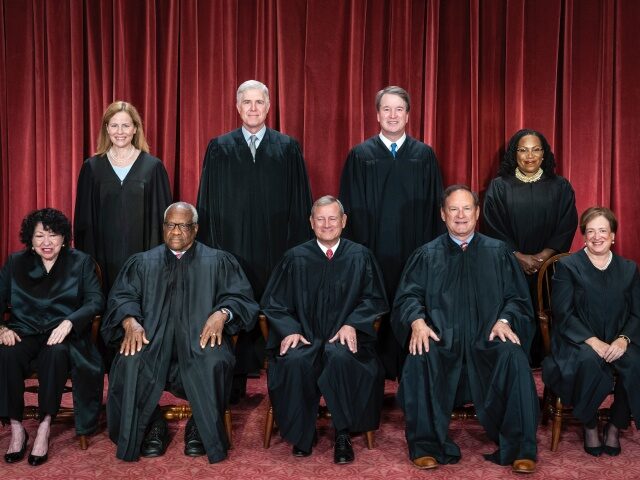
Justice Amy Coney Barrett authored the majority opinion, joined by Chief Justice John Roberts and the court's three liberal justices — Sonia Sotomayor, Elena Kagan and Ketanji Brown Jackson.
Writing for the court, Barrett said the dispute centered on whether federal election statutes establishing a single Election Day also impose a nationwide ballot receipt deadline. The majority concluded they do not.
"Two principles are important here," Barrett wrote. "First, post-election-day receipt, considered on its own, does not conflict with the election-day statutes."
The opinion further explained that federal law preempts conflicting state election laws only to the extent an actual conflict exists. Even if challengers disagreed with Mississippi's procedures, the court said, they had failed to demonstrate that simply counting ballots received after Election Day violates federal law.
The majority also emphasized that Congress, not the judiciary, is responsible for establishing election rules if it wishes to require ballots to be received by Election Day.
"The election-day statutes say nothing about ballot receipt, and we cannot add to the words Congress chose," Barrett wrote, adding that the Constitution leaves broad authority over election administration to the political branches rather than the courts.
The opinion noted that the nation's founders recognized the practical challenges of creating election laws capable of addressing every future circumstance and intentionally vested discretion over elections elsewhere instead of in the judiciary.
Justice Samuel Alito dissented, arguing that the majority's interpretation undermines Congress' requirement that federal elections occur on a single, uniform day.
Alito was joined in full by Justices Clarence Thomas and Neil Gorsuch, while Justice Brett Kavanaugh joined most of the dissent.
"The Court ... concludes that the election-day statutes merely require that each individual cast a vote on or before election day," Alito wrote. "But if that is all that the election-day statutes require, there is no sense in which the electorate as a whole can be seen as making its choice on election day."
According to Alito, permitting ballots to continue arriving and being counted after Election Day effectively extends the election beyond the date established by Congress.
"Election day is a specified date, not a span of multiple days," he wrote. "The election-day statutes require that federal elections occur on that date."
Pointing specifically to Mississippi's law, Alito argued that because ballots may continue to arrive for five days after Election Day, the election is effectively not complete until that period expires. In his view, federal law therefore preempts the state's ballot receipt deadline.
The case arose from a challenge brought by the Republican National Committee and other plaintiffs against Mississippi's election law, which permits officials to count absentee ballots postmarked by Election Day if they arrive within five business days afterward.
By declining to interpret federal election statutes as imposing a nationwide ballot receipt deadline, the Supreme Court left those state laws in place unless Congress decides to enact a different standard.
The ruling is expected to have implications beyond Mississippi, as numerous states have similar provisions allowing election officials to count timely mailed absentee ballots received after Election Day.
The case is Watson v. Republican National Committee, No. 24-1260.