
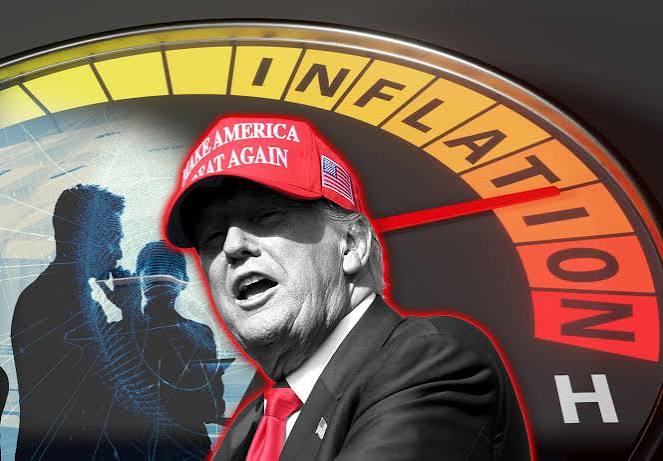
Tensions Rise for Republicans as Voters Fume Over Economy
WASHINGTON-- With the midterm elections less than two months away, Republicans are facing an increasingly difficult political challenge: convincing voters that the economy is moving in the right direction while household costs remain elevated.
Inside the GOP, lawmakers and candidates are offering competing ideas for how to address affordability, from tax rebates and lower credit-card fees to cheaper gasoline and direct payments to Americans. The lack of consensus has become increasingly apparent as Republicans confront concerns that voters may carry their economic frustrations into the voting booth in November.
President Donald Trump’s most dramatic proposal came at the Republican midterm convention in Dallas, where he pledged to give every American adult a $5,000 “dividend” if Republicans retain control of Congress. The proposal could cost more than $1 trillion and would require congressional approval, according to congressional leaders and independent fiscal analysts.
The proposal has generated skepticism within Republican ranks.
Sen. Ted Cruz of Texas has indicated that he could support the concept if it were structured as a tax refund, while arguing that policymakers should prioritize incentives for people who work and pay taxes.
“I think we should be incentivizing work,” Cruz said, arguing against sending payments to people who are not working.
Sen. Susan Collins of Maine has taken a more cautious position, warning that the proposal could be “extraordinarily costly.” Collins also questioned whether a payment should be distributed without regard to a recipient’s financial circumstances.
The disagreement illustrates the broader challenge confronting Republicans: finding an economic message that can simultaneously appeal to voters struggling with higher prices and satisfy lawmakers concerned about federal spending and the national debt.
Some Republicans are instead advocating targeted measures aimed at lowering specific consumer costs. Sen. Roger Marshall of Kansas is promoting legislation targeting credit-card processing fees, arguing that reducing the fees charged by major payment networks could lower prices for consumers.
The proposal has received support from Trump but faces opposition from some Republicans in the Senate, underscoring the difficulty of moving even relatively narrow economic proposals through Congress with the election approaching.
Time is also becoming a major constraint.
The Senate has only a limited number of legislative days remaining before lawmakers return to their campaigns, while the House has an even narrower window. That leaves Republicans with little opportunity to enact major economic legislation before voters head to the polls.
Gasoline prices have emerged as another significant concern. Elevated energy costs have become particularly problematic for Republicans campaigning in competitive races, as higher fuel prices quickly translate into increased transportation and household expenses.
Sen. Mike Rounds of South Dakota, who is seeking reelection, acknowledged the problem and said lawmakers need to find ways to bring gasoline prices down.
One proposal receiving attention is a nationwide expansion of E15 gasoline, which contains a higher percentage of ethanol. Supporters argue that allowing year-round sales could reduce fuel costs while benefiting American farmers.
But even that proposal has divided Republicans, particularly lawmakers from oil-producing states who have raised concerns about the potential impact on the refining industry.
The divisions extend beyond gasoline and direct payments.
Trump’s efforts to intervene in consumer markets have also produced friction within his own party. His decision to allow additional foreign beef imports as a way to increase supply and reduce grocery prices, for example, drew criticism from Republican lawmakers representing farming and ranching states, who argued that cheaper imports could put additional pressure on domestic cattle producers.
Sen. Thom Tillis of North Carolina has criticized what he considers government efforts to micromanage the economy, warning that such interventions can produce unintended consequences for consumers.
The debate comes as Republicans confront economic indicators that offer little immediate relief.
The Labor Department reported that consumer prices increased 3.4 percent over the year ending in August, while energy costs remained a significant contributor to overall price increases.
Oil prices have also climbed sharply amid the continuing conflict with Iran, adding another layer of uncertainty to the economic outlook. Recent reporting has highlighted the political bind created by higher energy prices as Republicans head toward the November elections.
Public opinion reflects the challenge.
An Economist/YouGov survey cited in the original reporting found substantially more Americans dissatisfied than satisfied with the state of the economy, while Democrats held an advantage over Republicans when respondents were asked which party was better equipped to handle economic issues.
Republicans have proposed additional ways to put money back into consumers’ pockets. Sen. Josh Hawley of Missouri, for example, has backed suspending the federal gasoline tax and separately proposed rebate payments for working Americans and dependent children.
Neither proposal has emerged as a clear consensus position within the Republican conference.
The underlying disagreement is largely about priorities. Some Republicans argue that tariff revenue should be returned to taxpayers through rebates or dividends. Others contend that additional revenue should instead be used to reduce the federal deficit and address a national debt that has surpassed $40 trillion.
That tension has become increasingly difficult to ignore.
For Republicans heading into the midterms, the economic debate is no longer simply about whether prices are too high. It is about what the party should do about them—and whether lawmakers can agree on an answer quickly enough for voters to see a difference.
With Election Day approaching, Republicans are confronting a narrow window to turn competing economic proposals into concrete policy. Meanwhile, inflation, energy prices and household affordability remain prominent concerns for voters.
The result is an increasingly fragmented economic message from a party that is under pressure to demonstrate that it has an effective response to the cost-of-living squeeze.