
'This Will Break Many Americans': Surging Gas Prices Drive Inflation to Highest Level in Years
WASHINGTON-- Inflation accelerated in March to its highest level in two years while consumer sentiment plunged to a record low, a stark combination that economists say reflects the growing economic toll of President Donald Trump’s conflict with Iran and could carry political consequences for Republicans heading into the midterm elections.
Surging energy prices drove much of the increase, as global markets reeled from a severe supply disruption tied to the war. The partial shutdown of tanker traffic through the Strait of Hormuz — a critical artery for the world’s oil and liquefied natural gas — triggered widespread shortages, sending the cost of gasoline, diesel and other petroleum products sharply higher.
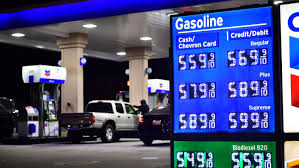
Consumer prices rose at an annual rate of 3.3% in March, the Labor Department reported Friday. Gasoline prices alone jumped 21.2% over the month, with energy accounting for nearly three-quarters of the overall increase in the consumer price index. The spike has quickly filtered into household budgets, with average gasoline prices climbing above $4 per gallon in many parts of the country.
At the same time, confidence among Americans has deteriorated. The University of Michigan’s consumer sentiment index fell below its previous low during the peak of post-pandemic inflation, with respondents overwhelmingly pointing to the war and its economic fallout as the primary cause of worsening conditions.
“For consumers, this is very real,” said Mike Reid, head of U.S. economics at RBC. He noted that while energy prices are often volatile, the broader outlook now hinges on the duration of the conflict and whether higher fuel costs begin to ripple through other sectors of the economy. “The key question is how long the conflict in the Middle East lasts, and what is the risk that these energy price increases start to spill over more broadly,” he said.
The renewed inflation pressures pose a challenge for Trump, who won reelection in part on promises to rein in rising costs and usher in what he described as an economic “golden age” for American workers. In recent weeks, the president had emphasized declining energy prices as evidence of progress on affordability — a message now undercut by the sharp reversal at the pump.
Democrats have seized on the developments, arguing that administration policies have exacerbated the situation. Democratic National Committee Chair Ken Martin criticized what he described as Trump’s “unhinged” trade agenda and “unpopular war with Iran,” saying they have left Americans facing “nothing except even higher prices.” Sen. Elizabeth Warren, D-Mass., echoed that sentiment, saying families struggling with everyday expenses “know exactly who is responsible.”
Administration officials have sought to reassure the public that the price spikes will prove temporary, pointing to easing costs in other categories and efforts to stabilize supply chains. Still, uncertainty remains high, particularly as disruptions in the Strait of Hormuz persist despite a recently announced two-week ceasefire. Trump said Thursday that Iran is doing a “very poor job” of restoring oil flows through the vital corridor.
“President Trump has always been clear about short-term disruptions as a result of Operation Epic Fury, disruptions that the administration has been diligently working to mitigate,” White House spokesperson Kush Desai said in a statement posted on X following the inflation report. He added that while energy prices remain volatile, costs for items such as eggs, beef, prescription drugs and dairy products have either declined or held steady.
A closely watched measure of underlying inflation offered some reassurance. Core inflation, which excludes volatile food and energy prices, rose at an annual rate of 2.6% in March — slightly above February’s 2.5% pace but below economists’ expectations. The data suggests that, for now, the price shock has been largely contained to the energy sector.
“This is a very big jump in headline inflation, which will impact real incomes immediately,” said Michael Metcalfe, head of macro strategy at State Street Markets. “But from a policy and market perspective, there will be some relief that core inflation appears contained so far. This doesn’t look like 2022.”
Even so, some economists caution that underlying pressures remain elevated. The Federal Reserve’s preferred gauge, the personal consumption expenditures price index, showed core inflation running at a 3% annual rate in February, according to data released Thursday. That level is above the central bank’s target and could limit policymakers’ flexibility if energy-driven price increases begin to spread.
“They have to be meaningfully worried,” said Joe Tracy, a former senior adviser at the Federal Reserve Bank of New York and the Dallas Fed, now a fellow at the American Enterprise Institute. “As these shocks work their way through the economy and push inflation higher, there’s a risk that inflation expectations become unanchored.”
With energy markets still under strain and geopolitical tensions unresolved, economists say the trajectory of inflation — and the broader economy — will depend heavily on how quickly global supply routes normalize and whether the conflict’s effects remain contained or deepen in the months ahead.