
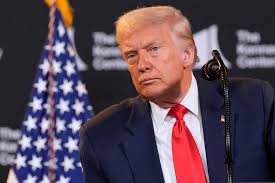
Trump Faces Court Roadblock as Judge Halts IRS Settlement
WASHINGTON — A federal judge on Monday invalidated President Donald Trump’s settlement agreement with the Internal Revenue Service, concluding that the lawsuit used to establish a proposed $1.776 billion "Anti-Weaponization Fund" did not present a genuine legal dispute and instead amounted to an improper effort to secure judicial approval for an agreement lacking a valid legal foundation.
In a 56-page opinion, U.S. District Judge Kathleen Williams ruled that the case failed to meet the constitutional requirement that federal courts decide only actual controversies between opposing parties. According to the judge, Trump and the IRS were never truly adverse litigants, making the settlement legally unsustainable.
The ruling came after intervenors asked the court to reopen the case, arguing that the agreement creating the proposed fund improperly used the judicial system to legitimize a political and administrative initiative rather than resolve a bona fide legal conflict.
Trump filed the lawsuit in January against his own administration over the disclosure of his federal tax returns. In late May, however, the parties reached a settlement that called for the creation of the $1.776 billion Anti-Weaponization Fund, which was intended to compensate individuals who claimed they had been unfairly targeted or mistreated by the federal government.
Williams rejected the premise underlying the agreement, writing that the litigation was never a legitimate adversarial proceeding.
"In sum, the facts before this Court demonstrate there was never adverseness between the Parties; there was never a case or controversy; and there was never a question as to who would prevail," Williams wrote.
The judge further concluded that Trump's $10 billion lawsuit against the IRS "was brought for an improper purpose—to gain the imprimatur of judicial legitimacy for a 'settlement' that had no viable basis in law or fact."
The decision also addressed the conduct of Trump's legal counsel. Williams referred attorney Alejandro Brito to the Florida Bar for possible disciplinary review after determining that sanctions were warranted in connection with his role in the litigation.
The case also drew scrutiny because of subsequent actions taken by the Justice Department. Acting Attorney General Todd Blanche later signed a memorandum directing that the federal government be "forever barred and precluded" from taking any future action related to Trump's past tax returns. The directive extended similar protections to Trump's businesses and members of his family.
Williams criticized the sequence of events surrounding the case, suggesting that the timing of the lawsuit raised additional concerns. She noted that if Trump had pursued the claims while he was a private citizen, the matter likely could have proceeded through the courts in the ordinary course and potentially been resolved within months.
"But that is not what happened," Williams wrote. "Instead, President Trump did not pursue his claims until he once again occupied the White House and had appointed his former lawyer, and the former lawyer of persons who are putative beneficiaries of the 'Anti-Weaponization Fund' to prominent positions in the DOJ."
The judge indicated that those circumstances undermined the legitimacy of the litigation and reinforced the conclusion that the lawsuit was designed primarily to facilitate a predetermined settlement rather than resolve an authentic legal dispute.
The ruling represents a significant setback for the agreement, although it remains unclear how broadly it affects the proposed Anti-Weaponization Fund itself. While the Justice Department cited the settlement as the legal basis for establishing the fund, the department possesses independent authority to create certain compensation programs without relying on outside litigation.
In recent weeks, the proposed fund had already come under increasing political scrutiny, including criticism from several Republican senators. Amid the growing backlash, Blanche announced that the Justice Department would abandon the initiative.
"We're not moving forward with the fund. Period," Blanche said.
The ruling effectively nullifies the settlement and underscores the judiciary's role in ensuring that federal courts adjudicate only genuine legal disputes rather than agreements reached between parties whose interests are not truly in conflict.