Trump Pushes Back On Mamdani, Says Netanyahu Won’t Be Arrested on US Soil
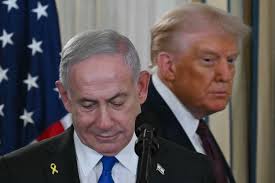
WASHINGTON — President Donald Trump said Monday that Israeli Prime Minister Benjamin Netanyahu would not be arrested "in any way, shape or form" while on U.S. soil, escalating a political and legal battle sparked by New York City Mayor Zohran Mamdani's remarks that he would explore whether local authorities could detain the Israeli leader if he visits the city.
Trump made the comments in a Truth Social post defending Netanyahu ahead of the prime minister's expected appearance at the United Nations General Assembly in New York this September.
"Netanyahu is fighting against the Islamic Republic of Iran," Trump wrote, criticizing the Iranian regime and dismissing any suggestion that the Israeli prime minister could face arrest in the United States.
The controversy stems from comments made by Mamdani, who told The New York Times that Netanyahu is a "war criminal" who "belongs in The Hague," referring to the International Criminal Court. The ICC issued an arrest warrant for Netanyahu in 2024 over alleged war crimes and crimes against humanity related to the war in Gaza—allegations that Netanyahu and the Israeli government deny.
Mamdani, a Democratic socialist and longtime critic of Israel's military campaign in Gaza, has said he is consulting with New York City's legal department to determine what authority, if any, the city would have to enforce an ICC warrant. He has maintained that he would not seek to rewrite existing laws but believes international arrest warrants for alleged war crimes should be respected.
"If someone is charged with a warrant by the International Criminal Court for these kinds of crimes, that's something I believe should be honored," Mamdani said Monday. He added that his position would also apply to other world leaders facing ICC warrants, including Russian President Vladimir Putin.
Netanyahu is expected to travel to New York in September to address world leaders at the annual U.N. General Assembly, setting the stage for what could become a high-profile legal and political showdown.
Mamdani's comments have drawn sharp criticism from some Democratic figures and leaders within New York's Jewish community. David Greenfield, former New York City councilman and chief executive of the Met Council, an influential Jewish nonprofit organization, called the proposal unprecedented and incompatible with democratic norms.
"The idea that an executive would try to direct a police agency under their jurisdiction to arrest their political opponents is very much third-world behavior," Greenfield said. "It's not what we do in a democracy."
The Israeli prime minister's office also condemned Mamdani's remarks, calling the International Criminal Court a "kangaroo court" and accusing the mayor of attempting to distract from problems facing New York City.
"Mr. Mamdani should focus on fixing the damage his policies have caused New York," Netanyahu's office wrote in a statement posted on social media Sunday.
Legal experts say any attempt to arrest Netanyahu in New York would face substantial legal hurdles. The United States is not a member of the International Criminal Court and does not recognize its jurisdiction. Additionally, the American Servicemembers' Protection Act of 2002 prohibits state and local law enforcement agencies from cooperating with certain ICC proceedings.
Brian Ginsberg, a partner at Harris Beach Murtha and former attorney in the New York Attorney General's Office, said an arrest attempt would likely trigger a complex legal dispute involving federal authority, international law, and municipal power.
"The arrest contemplated by Mayor Mamdani would face significant legal challenges," Ginsberg said. "It may well set up a three-way clash among local power, federal law, and international law."
The dispute comes as Trump's relationship with Netanyahu has at times been strained amid escalating tensions in the Middle East. The Wall Street Journal previously reported that Trump had privately expressed frustration with Netanyahu's calls for expanded military action during the recent conflict involving Iran.
With Netanyahu's anticipated visit just weeks away, the political fight over whether an international arrest warrant can be enforced on American soil is poised to become a flashpoint in both domestic politics and international diplomacy.