
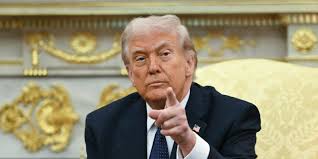
Trump Says He 'Won’t Rush' to End War With Iran as Negotiations Drag On
WASHINGTON-- Former President Donald Trump said he will not be “rushed” into ending a widening conflict in the Middle East, as negotiations with Iran continue to stall and tensions remain high across the region.
Speaking to reporters Thursday, Trump emphasized that any resolution to the conflict would be dictated by U.S. strategic interests rather than political timelines, signaling a potentially prolonged diplomatic and military standoff.
“We’re not going to rush into a deal that’s bad for this country,” Trump said. “If it takes longer, it takes longer. We want the right outcome.”
The remarks come as indirect talks between U.S. officials and Iranian representatives have dragged on for weeks without a breakthrough. At issue are disagreements over sanctions relief, uranium enrichment limits and regional security guarantees, according to officials familiar with the negotiations.
Trump’s stance reflects a shift away from calls within parts of the international community for a swift de-escalation, as concerns mount over the risk of a broader regional war. U.S. allies in Europe have urged Washington to pursue a faster diplomatic resolution, warning that prolonged uncertainty could destabilize global energy markets and increase the likelihood of miscalculation between military forces operating in close proximity.
Administration officials say the negotiations remain complex, with Iran seeking broader economic concessions while resisting stricter nuclear oversight measures. Iranian leaders, for their part, have accused the U.S. of negotiating in bad faith and maintaining what they describe as “maximum pressure” tactics.
Trump defended his approach, arguing that previous agreements failed to curb Iran’s nuclear ambitions or its support for proxy groups across the Middle East.
“We’ve seen what happens when you rush deals,” he said. “They don’t work, and they make things worse.”
Analysts say the drawn-out talks could have significant implications for both regional stability and domestic politics. A prolonged conflict risks disrupting oil supplies and driving up prices, while also testing the administration’s ability to balance military deterrence with diplomatic engagement.
Meanwhile, lawmakers on Capitol Hill remain divided. Some Republicans have backed Trump’s insistence on tougher terms, while others — along with many Democrats — have called for a clearer strategy to prevent escalation and bring the conflict to a close.
Despite the slow progress, officials involved in the negotiations say communication channels remain open, and there is cautious optimism that a framework agreement could eventually be reached.
For now, Trump’s message appears clear: the administration is prepared for a longer timeline, even as pressure builds at home and abroad to bring the conflict to an end.