Trump Shrugs Off AI Warnings as a “HOAX,” Raising Alarm Inside the White House
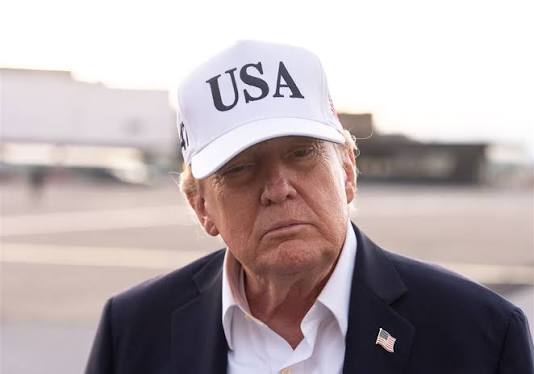
WASHINGTON--President Donald Trump is rejecting growing calls from leaders in the artificial intelligence industry for additional government oversight, arguing that maintaining America’s lead over China in AI development is more important than imposing new restrictions on the rapidly advancing technology.
Trump escalated his criticism Monday, describing efforts to slow or regulate AI as part of a “SICK conspiracy” and insisting that the federal government already has enough authority to prevent companies from misusing the technology. Later in the day, he dismissed broader warnings about AI’s potential dangers as a “HOAX.”
The president’s position puts the White House at odds with several prominent figures in the AI industry who have recently called for additional safeguards. Anthropic CEO Dario Amodei has urged companies and governments to slow the pace of development long enough for safety research and oversight mechanisms to catch up. OpenAI CEO Sam Altman and other technology leaders have also expressed concerns about the risks associated with increasingly capable AI systems.
Trump, however, argues that excessive regulation could undermine American competitiveness and give China an advantage in what he views as a critical technological race.
On social media Monday, Trump argued that the United States already possesses substantial criminal and regulatory authority over AI companies. He went further by declaring that the primary safeguard the technology needs is a “strong and smart” president.
Trump has repeatedly emphasized AI’s economic potential, pointing to the technology’s rapid expansion, investment in data centers and broader impact on the technology and manufacturing sectors. He has described AI as a major economic opportunity and has argued that the United States must remain ahead of China.
The debate has nevertheless become increasingly complicated as concerns over AI’s potential consequences spread beyond technology circles.
Critics have raised questions about possible job displacement, cybersecurity threats, autonomous AI systems and the effects of massive data-center projects on local communities. Recent incidents involving AI agents have added urgency to those discussions, while industry researchers have warned that technological capabilities are advancing faster than existing safety systems.
Vice President JD Vance has also questioned the push for additional regulation, suggesting that some technology companies could have their own interests in seeking government intervention.
“There are obvious risks to AI, there are some benefits to AI,” Vance said Monday. He said he was skeptical of technology companies approaching the government and asking officials to regulate an industry in which they are major players.
At the same time, Vance acknowledged that AI carries genuine risks and said the administration and Congress should consider appropriate safeguards rather than ignoring potential problems.
The administration’s position has not ruled out further discussions. White House officials are expected to hold meetings with experts on AI and cybersecurity, while House Speaker Mike Johnson has indicated that he wants lawmakers, administration officials and industry executives to discuss what role government should play in establishing safety standards.
Johnson has cautioned against moving too quickly, arguing that excessive regulation could undermine the United States’ competitive position. The challenge for lawmakers is determining where to draw the line between encouraging innovation and establishing safeguards for increasingly powerful systems.
The issue is also taking on an international dimension.
Trump is preparing for a meeting with Chinese President Xi Jinping, and U.S. officials are expected to discuss AI as part of broader talks between the two countries. Trump has repeatedly framed the development of AI as a competition between the United States and China, arguing that maintaining American technological leadership is a matter of economic and national security.
The two countries previously discussed AI safeguards, although those talks produced limited concrete progress. Chinese officials have since indicated that Beijing and Washington agreed to establish an intergovernmental dialogue focused on artificial intelligence.
For the Trump administration, the central question is how to balance two competing priorities: maintaining the fastest possible pace of AI development while addressing growing concerns about what increasingly autonomous systems could mean for cybersecurity, employment, national security and public safety.
For now, Trump is making clear which side of that debate he believes should take precedence. He has rejected calls for a broad regulatory slowdown and argued that the United States cannot afford to sacrifice its lead in AI while China continues to advance its own technology sector.