
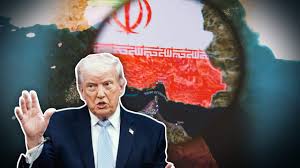
Trump’s Budget Director Defends White House Plan for Massive Military Spending Increase
WASHINGTON-- A sweeping push to expand U.S. weapons manufacturing capacity and accelerate production of ships, aircraft and unmanned systems will demand substantial upfront funding, President Donald Trump’s budget chief told lawmakers Wednesday, outlining a proposal that would significantly reshape federal spending priorities.
Russell Vought, director of the Office of Management and Budget, used his testimony before a House committee to formally launch the administration’s effort to increase defense spending to nearly $1.5 trillion in the upcoming fiscal year. That figure would mark a sharp rise from roughly $1 trillion currently allocated. To offset part of the increase, the White House is proposing broad reductions—about 10% overall—to a range of domestic programs, including medical research, heating assistance and other discretionary initiatives. The proposed cuts would not apply to mandatory spending programs such as Social Security and Medicare, which remain politically sensitive and largely untouched.
The plan immediately set the stage for a high-stakes political fight, highlighting deep partisan divisions likely to define budget negotiations ahead of the next midterm elections. Vought emphasized that the scale of the proposed military expansion would require long-term financial commitments rather than incremental adjustments.
“For the industrial base to double or triple and build more facilities—not just add shifts—it requires multiyear agreements to purchase into the future,” Vought told the panel. “That cost has to be recognized in this first year.”
Under the administration’s framework, approximately $1.1 trillion in defense funding would be pursued through the standard appropriations process, which typically requires bipartisan support in Congress. An additional $350 billion would be sought through a separate legislative package that Republicans could pass without Democratic backing using party-line votes.
Rep. Brendan Boyle of Pennsylvania, the committee’s top Democrat, said he supports maintaining a strong national defense but sharply criticized the scale and structure of the proposed increase. Boosting defense spending by more than 40% while simultaneously reducing programs that many Americans rely on, he argued, reflects misplaced priorities.
Committee Chairman Rep. Jodey Arrington, R-Texas, had anticipated a contentious hearing, predicting beforehand that it would be more “amped up” than usual. That tone was set early, as Arrington used his opening remarks to fault former President Joe Biden’s tenure, arguing that Trump inherited a deeply troubled economic and policy landscape upon taking office last year. Arrington credited the current administration with tightening border security, lowering taxes and curbing nondefense spending.
Democrats quickly pushed back. Boyle mocked the line of criticism, suggesting Republicans were leaning heavily on familiar political targets. “You know how bad this economy is when we hear Joe Biden being invoked, we hear trans people being invoked. I was waiting for Jimmy Carter to be blamed next,” he said.
Boyle also pointed to signs of economic strain, citing declining consumer confidence and rising fuel prices. He noted that a gas station in Philadelphia was recently charging $4.11 per gallon, up from under $3 just weeks earlier, which he attributed to what he called Trump’s “war of choice in Iran.”
Rep. Becca Balint, D-Vt., described the proposed defense increase as unprecedented and alarming. “We’ve never in the history of this country seen spending like this, paid for by slashing health care, education and housing,” she said. Pressing Vought, Balint asked whether allocating $350 billion toward the conflict with Iran would help reduce costs for American households.
Vought did not directly answer the question, instead defending the administration’s broader budget priorities. “It is certainly not defunding child care. We fully fund child care in this budget,” he said.
Balint continued her line of questioning by invoking the administration’s “America First” rhetoric, arguing that the proposed war funding could instead support domestic needs. She noted that $350 billion could finance an expanded health insurance tax credit for a decade and said her constituents are increasingly questioning why federal resources are directed toward military engagements rather than lowering health care costs.
Vought responded by framing the administration’s actions as necessary for national security, stating that the president is determined to prevent Iran from developing nuclear weapons and expanding its military capabilities. “He is doing what is necessary to keep us safe, while at the same time trying to pursue diplomacy so that we can get out of wars and lower those costs over time,” Vought said.
Lawmakers also sought clarity on how much additional funding the administration might request for ongoing military operations before the current fiscal year ends on Sept. 30. Vought said those figures are still being developed and would likely be included in a supplemental emergency spending request, separate from the next year’s budget proposal.
Rep. Veronica Escobar, D-Texas, asked whether the anticipated request would exceed $50 billion. “We’re still working on it,” Vought replied. “I don’t have a ballpark for you.”
The exchange underscored the uncertainty surrounding the full cost of the administration’s defense agenda, even as the broader contours of a significant military buildup—and corresponding domestic spending cuts—come into sharper focus.