Trump’s Vendettas May Be Winning Battles — But Losing Republicans the War
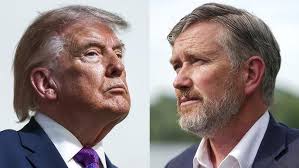
WASHINGTON — President Donald Trump’s escalating feud with Rep. Thomas Massie has become the latest test of loyalty inside the Republican Party — and a revealing example of the political risks that come with governing through retaliation.
Massie, the libertarian-minded Kentucky congressman known for bucking party leadership and opposing deficit spending, has long occupied an uneasy place within Trump’s orbit. But after publicly breaking with Trump on foreign policy and government spending battles, Massie once again found himself squarely in the president’s political crosshairs ahead of Kentucky’s Republican primary.
Trump’s response followed a familiar pattern: public attacks, endorsement threats and efforts to portray dissent as betrayal.
For Trump, the strategy continues to produce results. Republican lawmakers watching the clash understand the message clearly — crossing the president can invite a well-funded primary challenge and relentless political pressure. In today’s GOP, where Trump remains overwhelmingly popular with the Republican base, few elected officials are eager to become the next target.
From a tactical standpoint, Trump’s approach has been undeniably effective. Over the past several years, he has reshaped the Republican Party into one increasingly centered around personal loyalty and ideological alignment with his political movement. Critics inside the party have retired, lost primaries or softened their opposition after facing backlash from pro-Trump voters.
But the Massie feud also illustrates the broader danger for Republicans: a party consumed by internal score-settling risks shrinking its coalition at the very moment it needs to expand it.
Massie is hardly a traditional moderate. He is one of the House’s most conservative members and frequently aligns with the GOP base on taxes, gun rights and limited government. Yet his willingness to occasionally oppose Trump has made him a recurring political enemy. That reality sends a broader signal throughout the party — disagreement itself may now be politically intolerable, even among conservatives with deeply Republican voting records.
The long-term consequences could extend beyond one Kentucky primary.
Republicans have struggled in recent election cycles to consistently win over suburban independents and swing voters who often view constant political warfare as exhausting and destabilizing. While Trump’s confrontational style energizes loyal supporters, it can also reinforce Democratic arguments that the GOP has become more focused on personal grievances than governing priorities such as inflation, debt or public safety.
The danger for Republicans is not merely ideological but institutional. Political parties that increasingly reward loyalty over independence can become less adaptable and less capable of broadening their appeal. Candidates may begin tailoring every position around avoiding presidential retaliation rather than responding to local constituencies or policy realities.
Trump’s allies argue that party unity is essential and that Republicans who publicly undermine the president weaken the broader conservative movement. There is political logic behind that argument, particularly in an era of hyperpolarized elections where base turnout can determine outcomes.
But there is also a difference between unity and enforced conformity.
Massie’s feud with Trump underscores a growing tension inside the GOP: whether the party can remain a broad conservative coalition or whether it is evolving into a movement where personal allegiance to Trump outweighs ideological diversity or independent judgment.
For now, Trump continues to win many of these internal battles. His influence over Republican voters remains powerful, and few rivals possess the political infrastructure to challenge him directly.
The unanswered question is whether continual political purges ultimately strengthen the Republican Party — or slowly weaken its ability to compete beyond Trump’s most loyal base.