U.S. Reveals Nuclear Submarine Location Following Trump’s Rejection of Iran Terms
WASHINGTON — The Pentagon on Monday disclosed the location of a U.S. nuclear-armed submarine operating in the Middle East region shortly after President Donald Trump rejected what administration officials described as the latest Iranian proposal aimed at easing tensions over Tehran’s nuclear program and regional military activity.
Defense officials said the USS West Virginia, an Ohio-class ballistic missile submarine capable of carrying nuclear warheads, had entered the Arabian Sea as part of what the Pentagon called a “strategic deterrence mission.” The rare public acknowledgment of the submarine’s location appeared intended to send a direct message to Iran amid escalating tensions between Washington and Tehran.
“The United States remains fully prepared to defend its forces, its allies and its interests in the region,” Pentagon spokesperson Rear Adm. Daniel Keller said during a briefing. “Our strategic posture reflects our commitment to deterrence and regional stability.”
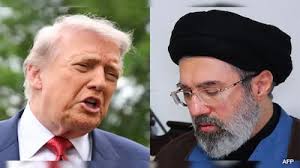
The disclosure came hours after Trump told reporters at the White House that he had rejected terms presented through intermediaries during recent backchannel discussions with Iranian officials.
“They want a deal, but not the right deal,” Trump said. “We’re not going to accept weak conditions that allow Iran to continue threatening the region.”
Trump did not specify which elements of the proposal he found unacceptable, though administration officials said the Iranian framework sought partial sanctions relief in exchange for temporary limits on uranium enrichment and a reduction in attacks by Iran-backed militias operating in Iraq and Syria.
Iran’s Foreign Ministry accused Washington of escalating tensions by publicizing the submarine’s deployment and warned that increased U.S. military activity near Iranian waters risked destabilizing the region further.
“The United States continues to pursue intimidation instead of diplomacy,” ministry spokesperson Nasser Kanaani said in remarks carried by Iranian state media. “Iran will respond appropriately to any threat against its sovereignty or security.”
The latest standoff follows weeks of heightened military activity across the Middle East, including attacks on commercial shipping routes in the Red Sea and recent confrontations involving Iranian-backed armed groups and U.S. forces stationed in the region.
Military analysts said the Pentagon’s decision to identify the submarine publicly was highly unusual because ballistic missile submarines are typically deployed in secrecy as part of the U.S. nuclear triad.
“Strategic submarines are designed to remain hidden,” said Rebecca Grant, a national security analyst specializing in U.S. force posture. “When the Pentagon advertises where one is operating, it’s almost always intended as a deliberate geopolitical signal.”
The White House insisted it remains open to diplomatic negotiations but warned that the administration would not tolerate further attacks on U.S. personnel or allies in the region.
Secretary of State Marco Rubio said the United States was pursuing “peace through strength” while urging Iran to return to negotiations under stricter conditions.
“We’re prepared for diplomacy,” Rubio said during a television interview Monday. “But diplomacy cannot happen under threats, proxy attacks or nuclear escalation.”
European allies meanwhile called for restraint on both sides, with officials in France and Germany warning that deteriorating relations between Washington and Tehran could trigger broader instability across the Middle East.
Oil markets reacted cautiously to the developments, with crude prices rising modestly amid concerns that escalating tensions could disrupt shipping traffic through the Strait of Hormuz, a vital global energy corridor.